
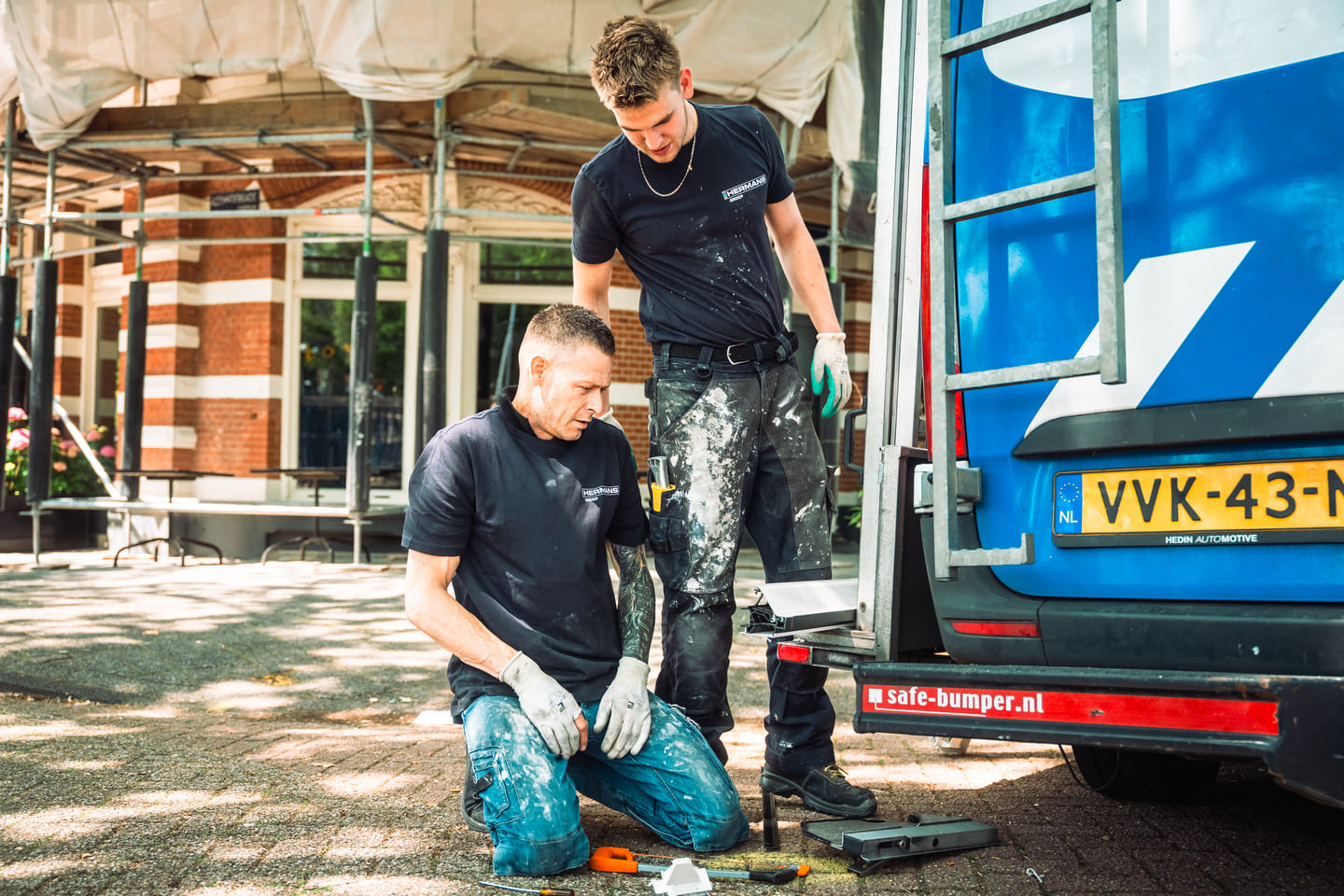
Two glassmakers from Hermans Groep at work on the company bus

Knowledge base

Insulating with glass-in-glass: 4 ways

Glass-in-glass is beautiful, but it insulates poorly and often lets in draughts. Fortunately, you can insulate it without losing the character of your window. Here are the options.

Why stained glass insulates poorly

Glass-in-glass is just glass: small pieces of glass, with lead strips attached to them. Only glass allows a lot of heat to pass through. Furthermore, old lead strips will eventually crack or come loose over time. This causes condensation and water to enter through the lead. Especially in thirties-era homes, glass-in-glass is found in the upper lights and in the front door.

Method 1: incorporating stained glass into insulating glass

The stained glass is removed from the frame and incorporated into an insulating pane. The panel sits between or against the glass panels of a double pane. From the outside and inside you can see your own stained glass, but the window is insulated as a double pane.

  • Advantage: good insulation; the lead is protected from the weather and wind, and you keep the original glass.
  • Disadvantage: The grid is thicker. Sometimes the solder needs to be adjusted. A damaged panel must first be repaired.

Method 2: insulated glass with the stained-glass window behind it

The stained glass remains on the outside and an insulating window comes in on the inside, for example HR++. This is also called rear-facing glazing. The view from outside does not change.

  • Advantage: The original stained-glass window remains exactly as it was.
  • Disadvantage: A deeper connection is needed. Ventilation must continue between the stained-glass window and the insulating glass, otherwise condensation will form.

Method 3: an end-goal window on the inside

A separate window with (insulating) glass is installed on the inside of the frame. The stained-glass window remains intact. This is often the simplest solution in a monument, because nothing changes about the existing window.

  • Advantage: No interference with the original window and often without a permit required. The journey is also immediate.
  • Disadvantage: You can see an extra window from inside. To clean the stained glass, the front window must be able to be opened.

Method 4: vacuum glass or new stained-glass design

Can the old stained-glass windows not be saved? Then you can choose new stained-glass windows in an insulated window. Another option is Vacuum glazing with applied lead strips. Vacuum glass is so thin that it often fits into existing frames. The appearance then resembles stained glass, but the insulation is much better.

Monument or protected urban area?

Is your property on the monument list or in a protected urban area? In that case, you often need a permit to change the glass in the windows. A front window on the inside is usually the least invasive option. Consult your municipality beforehand. You can read more about this in Monument glass: insulating while preserving character.

Frequently asked questions about insulating with glass-in-glass

Can I insulate stained glass myself?

You can handle the problem of condensation on the window frame yourself with condensation strips. Insulating the glass itself requires custom work from a glass technician, and repairing damaged lead from a glass repairman.

What is the best way?

That depends on the condition of the stained glass, the frame, and whether it is a monument. If you want to insulate as effectively as possible, stained glass in insulating glass is the most effective option. If you want to change as little as possible to the window, a fixed window is the best choice.

Advice on stained glass

Hermans Groep operates throughout North Holland, including in old inner cities such as Amsterdam, Haarlem and Alkmaar. View our working area of Get in touch. Feel free to send us a photo of your window; we’ll work with you on it.

Glassblower in the neighborhood: We work, among other things, in Haarlem, Hilversum, Bussum, Heemstede, Amsterdam and Weesp. View all places in our working area.